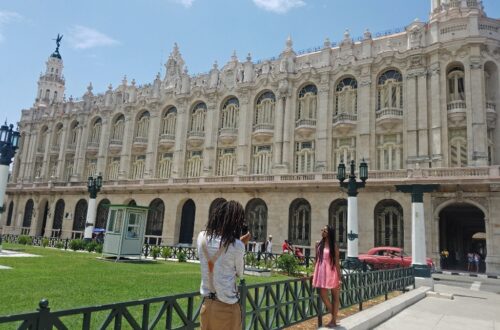

Visiting Rio During Carnival Week: My First-Time in Brazil
Exploring Rio during Carnival season is a traveler’s dream. Mountains and sea surround you in an urban city where every turn reveals a parade, party, or barbecue. It’s an immersive week of sensory beauty—festive backdrops blending towering peaks, turquoise waves, and bright outfits dancing to Brazilian rhythms. But beyond Rio, there’s Ipanema, Copacabana, and Niterói waiting to be explored. Discover our first impressions of Brazil’s Carnival week with this guide.
What You Should Know
Language
Portuguese is the official language of Brazil, though English is spoken in tourist areas. It’s always been my favorite language; the way it rolls off the tongue in smooth rhythms is just, chef’s kiss. If you speak Spanish, you may be able to get by except when they start to talk fast! Most locals will appreciate even a few words of Portuguese. Simple phrases like obrigado (thank you) or bom dia (good morning) will go a long way in connecting with people and immersing into the local culture.
Transportation
We started off hiring a driver recommended to us by a family member, but that began to be costly. So instead we used Uber a few days in and wish we’d done that from the start! We never felt unsafe or had a negative experience with any driver.
Currency
Brazil’s official currency is the Brazilian real (BRL), often written as R$. Cash is widely accepted, especially at local markets and smaller food stands, though most hotels and restaurants also take credit cards. ATMs are common in major areas, but it’s smart to carry some cash for taxis, beach vendors, or street snacks. Exchange rates can vary, so using reputable exchange offices or ATMs inside banks is the safest option.
Safety
While Rio and its surrounding areas are vibrant and welcoming, it’s important to stay alert, especially during Carnival when crowds are large. Keep valuables out of sight, avoid wearing flashy jewelry, and use crossbody bags that zip securely. Stick to well-lit, populated areas, including when waiting for your ride. With a bit of awareness and common sense, you can enjoy the festivities safely and confidently.
Food
Brazilian cuisine is a vibrant reflection of the country’s diverse culture. As an Afro-Latina, some of the foods reminded me of Caribbean dishes created by African ancestors. Other dishes and drinks are uniquely Brazilian, such as caipirinhas (Brazil’s signature cocktail). But you can’t leave Brazil without visiting a churrascaria. If you’ve been to Fogo de Chao, it’ll be like that but at a much lower price!
Be wary of foods that sit out for long periods and opt for freshly cooked meals to avoid getting sick. I got sick from a local grocery store’s buffet that I frequented for breakfast, which I believe was from the cheese.
Our Stay in Niteroi
While most travelers stay in Rio during Carnival, we opted for a quieter escape across the bay—Niterói. Just a short ferry or bridge ride from the city, Niterói offers stunning skyline views of Rio, beautiful beaches like Itacoatiara, and a calmer pace that contrasts perfectly with Carnival’s chaos. You can enjoy the festivities by day and return to a peaceful retreat each evening, surrounded by bay breezes and panoramic sunsets.

We stayed at H Niterói Hotel, a sleek and modern property. It features a restaurant, a rooftop pool, and a bar with some of the best views of Rio’s skyline. From our room’s balcony, we had the million-dollar view of one of the seven natural wonders of the world, Guanabara Bay (the world’s largest bay by volume), granite mountains, including Sugarloaf Mountain, featuring the Christ the Redeemer statue.



Activities
Carnival Night
If you’re traveling to Rio for Carnival, chances are you purchased your official tickets online to be picked up in Copacabana. The Carnival staff has planned a secure process to get your tickets. You must first line up outside the Atlântico Copacabana Hotel, where you will be given a wristband before entering the hospitality desk. You will then be led upstairs, where you will present your voucher, photo ID, and the credit card used to purchase your tickets. After all is verified, you will be handed your tickets.
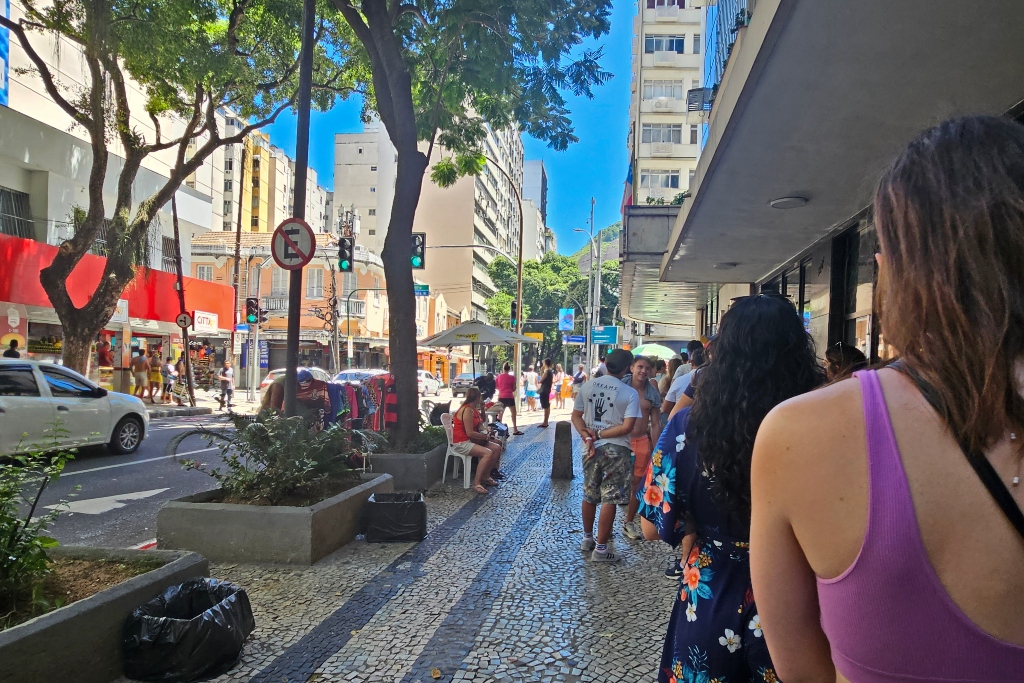
Our second night in Rio was the most anticipated. It’s the main reason we visited Rio. We’ve never been so excited to stay up all night. But for Carnival, it’s absolutely worth it. The anticipation builds on the way to the sambadrome. As traffic jams by the closed roads and groups of carnival hop out of their rides and walk the rest of the way. You’ll know you’re almost there when long lines form on either side of the dome, everyone’s either confusingly checking their ticket to see which line to be in or buying carnival accessories from street vendors. I was both.

Sitting in our allocated seats in Sections 12 and 13 at the far end of the Sambadrome turned out to be the perfect choice. The seats were numbered—meaning no scrambling for a spot—and for the price, we were pretty close to the front, with a clear view of every float and dancer. The parade moved in segments, and between each one, the lights dimmed as colored spotlights drifted across the crowd, creating an anticipatory transition while guests wandered off to grab snacks before the next school entered.

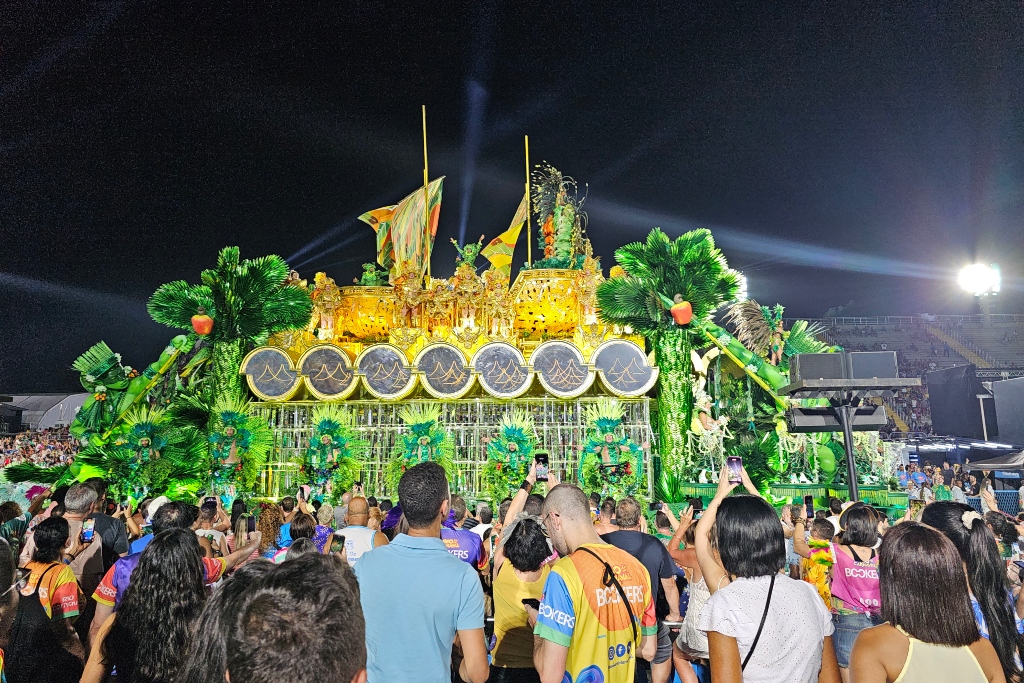
You can’t fully grasp the scale of the floats until they’re towering over you, passing just a few feet away in their massive glory. One moment, a giant mermaid glides by, blowing shimmering bubbles into the crowd; the next, a fiery “underworld” float rolls through with glowing red graphics and plumes of smoke curling into the night air. Massive serpents, jeweled wings, mythical creatures—each creation is its own world. But what truly makes the parade a celebration is the people: thousands of dancers moving with pride and joy. It’s this shared, uninhibited energy that transforms Carnival into the world’s greatest party.

By 3 a.m., I felt the sleepiness creeping in, but the drums and energy around me kept pulling me back to my feet. Around 4 a.m., about a quarter of the crowd trickled out; by 5 a.m., nearly half had gone. But we stayed until the final samba school passed, dancing all the way into sunrise. This was the proudest moment of my trip since staying up all night is not a thing I normally do!

Sugarloaf Mountain
Visiting Sugarloaf Mountain feels like gaining access to Brazil’s most exclusive vantage points. The journey begins before the ascent with a photographer capturing your excitement in front of a Sugarloaf backdrop. Once it’s your turn to board the iconic cable car ride, it’ll glide smoothly above the bay, offering panoramic views of Rio’s skyline, the beaches of Copacabana, and the emerald curves of Guanabara Bay. At the summit, the city unfolds below like a living postcard, but you’ll have to take in the fact that you’re really there.

There’s an array of small shops and snack stands to make yourself comfortable in as you wander around this panoramic setting. There are also photo ops to pose by, so you’ll have epic shots with an expansive background.
If you’re brave enough, there is a second cable car ride at the edge of the sight if you’re ready to take this experience to further heights.

Christ the Redeemer
The best time to visit Christ the Redeemer is on a clear, sunny day—but on our final day in Rio, we were met with clouds and steady rain. If you find yourself in the same situation, you’ll have to be patient enough to wait for the clouds to part long enough to catch a fleeting glimpse of the statue. Thankfully, the journey up is beautiful, rain or shine. The Corcovado train climbs through a tunnel of lush green forest, and as you ascend, the views open up to reveal just how high you’re traveling. At certain points, the drop beside the tracks reminds you that you’re riding between mountains, so those afraid of heights may want to keep their eyes forward. Even with the weather, the ride was magical.

Selaron Steps
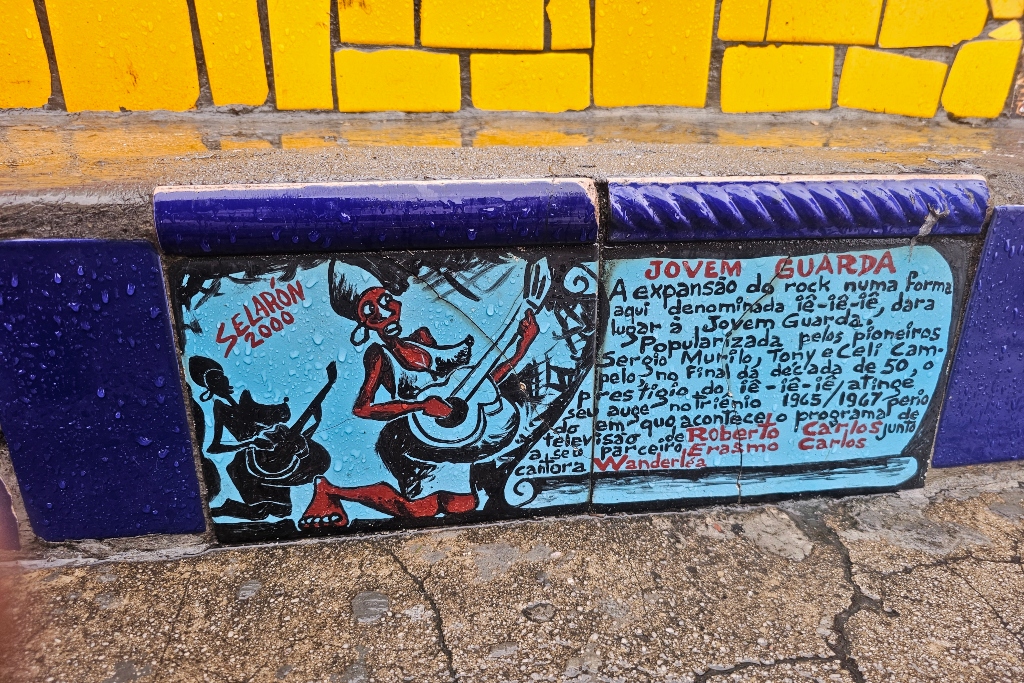
Our final stop was the Escadaria Selarón, the iconic mosaic staircase linking the neighborhoods of Santa Teresa and Lapa. It’s known as a pop-culture landmark, famously featured in Snoop Dogg and Pharrell’s “Beautiful” music video. Created by Chilean artist Jorge Selarón as a tribute to the Brazilian people, the steps form a vibrant kaleidoscope of more than 2,000 tiles sourced from around the world. As you examine the artwork closely, you’ll notice that each tile tells its own story, blending color, culture, and creativity in a way that is artistic and deeply personal. We arrived just as a light drizzle began, which turned out to be a gift—because there were no tourists in sight, giving us the rare chance to capture photos with a completely clear backdrop. Each step up felt more iconic as my memory time-traveled back to 2003 and I took a seat in front of the steps where Snoop and Pharrell sat. Once the rain let up, visitors trickled in almost instantly.
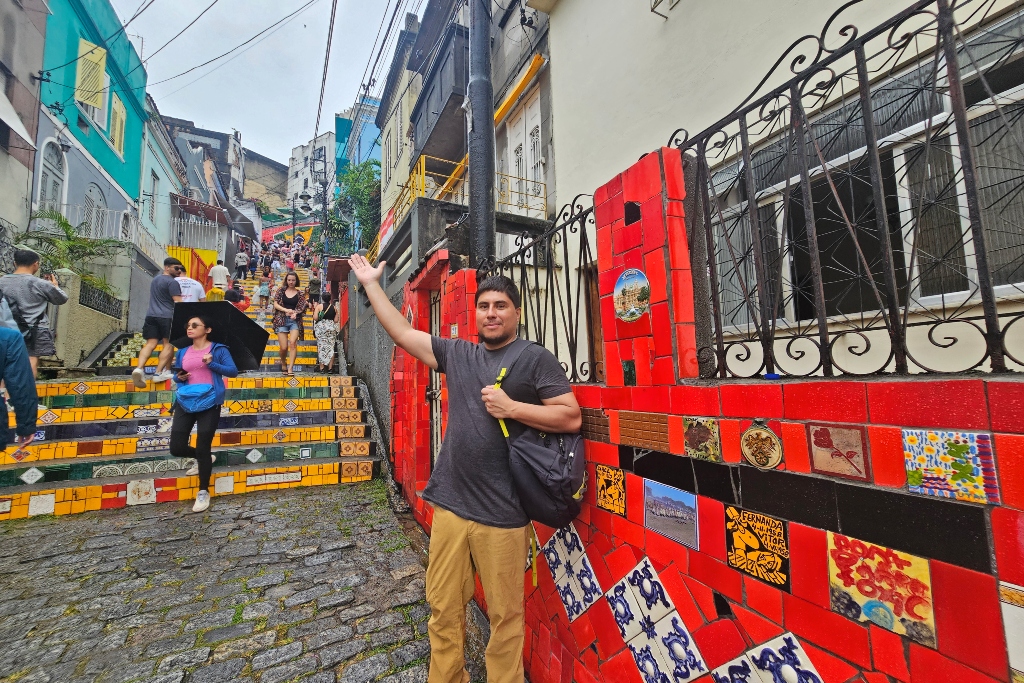
From the electrifying energy of Carnival nights to the peaceful shoreline views in Niterói, our week in Brazil turned out to be a vivid tapestry of culture, and color. We sambaed until sunrise at the Sambadrome, stood in awe atop Sugarloaf Mountain, rode through rainforest clouds to Christ the Redeemer, and wandered the mosaic dreams of the Selarón Steps. Every experience revealed a different side of Rio—its art, its rhythm, and its landscapes. Whether you come for Carnival or for the coastline, for the food or for the vistas, Brazil will leave a permanent imprint on your spirit calling you back to feed your senses once more.

You May Also Like

Elsa’s Arrival
Indulge In Style: Lunch In The Versace Mansion